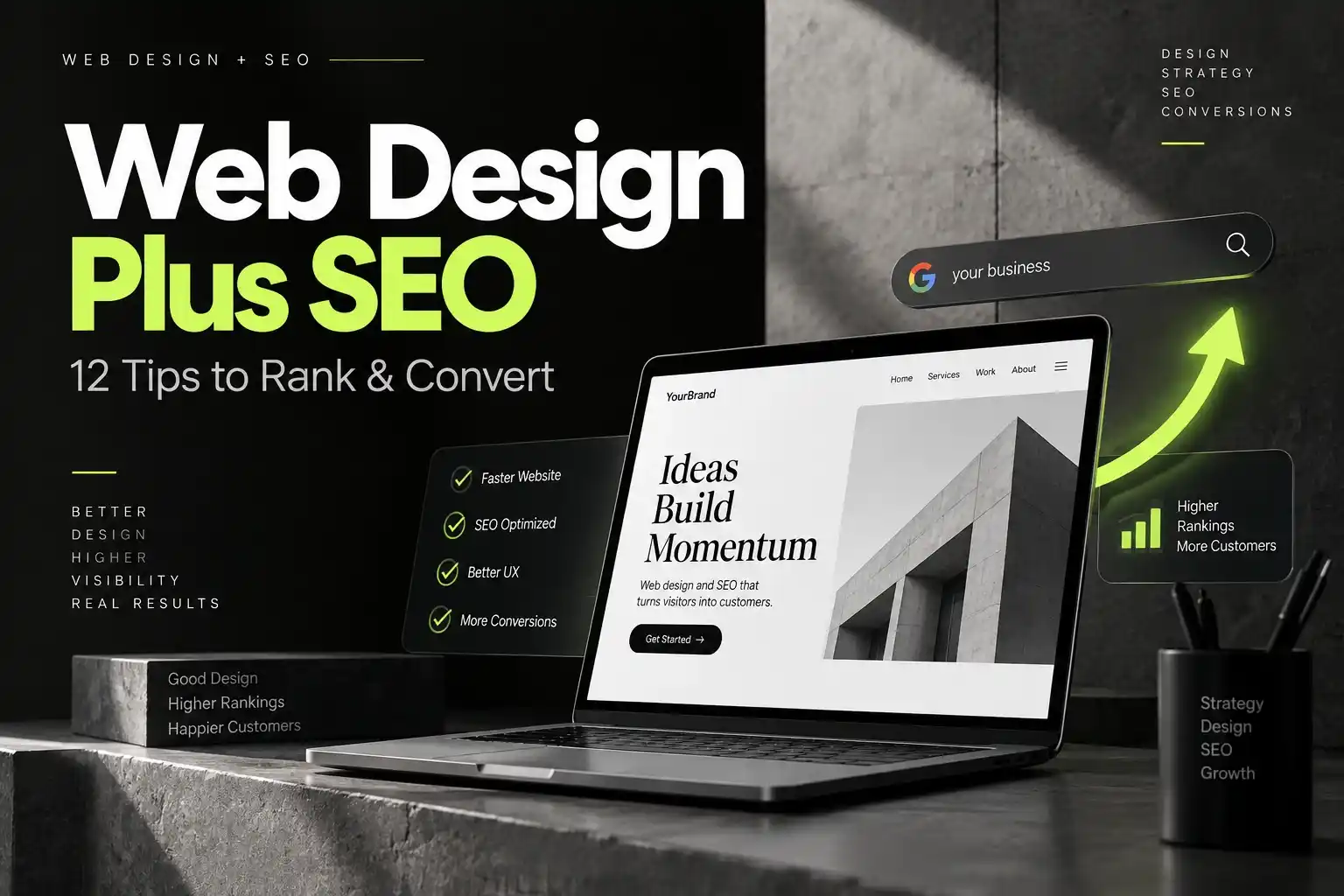
Web design plus SEO means planning a website’s design, content, and technical setup around both users and search engines. When the two work together, search engines can find and understand your pages more easily, and visitors can act more easily. This supports visibility and conversions, but it cannot guarantee rankings.
Web design plus SEO is one process that combines:
You may also see it called Search Engine Optimization website design, SEO-friendly website design, or website design and Search Engine Optimization. All describe the same idea.
Separate teams often create avoidable problems. A designer may hide key text inside image sliders. A developer may build slow pages. A Search Engine Optimization specialist then arrives to fix what was already built.
Design choices affect crawlability, usability, speed, and conversions. No single choice guarantees higher search rankings, but each one can help or hurt.
Web Design Decision |
SEO Impact |
User Impact |
|---|---|---|
Navigation
|
Helps crawlers find important pages
|
Makes information easy to reach
|
Page structure
|
Clear headings help search engines read content
|
Content is easy to scan
|
Mobile design
|
Supports mobile usability
|
Works on any screen
|
Images
|
Compressed images help speed; alt text adds context
|
Faster, more accessible pages
|
Page speed
|
Supports page experience
|
Less waiting and fewer exits
|
Content layout
|
Makes topics and intent clear
|
Answers arrive quickly
|
URLs
|
Short, descriptive URLs are easier to interpret
|
Easier to read and share
|
Calls to action
|
Indirect, through better engagement
|
Clear next steps
|
How does UX affect SEO? Good user experience (UX) helps visitors find what they need, and Google says it aims to reward helpful content. Google has not confirmed that specific engagement metrics are direct ranking factors, so treat UX as a way to serve people, not to game a score.
Here is how how UX affects SEO plays out in practice:
Search intent → relevant landing page → usability → trust → conversion
A visitor searches for a service. If your page answers the question, loads quickly, and shows a clear next step, that journey works. UX design, website usability, and search-friendly navigation all support it. Accessibility matters too: clear contrast, readable text, and keyboard-friendly menus help everyone. That is how an optimized user experience supports SEO and UX goals together.
Website structure, or website architecture, is how your pages are organized. Information architecture is the planning behind it. A clear website hierarchy helps users navigate and helps search engine crawlers discover pages and understand how they relate.
A service business might use this SEO-friendly website structure:
Home → Services → Individual Service Page → Industry Page → Location Page → Supporting Resource
The right structure depends on your business. Keep important commercial pages within a few clicks of the homepage. Use SEO-friendly URLs, such as /services/web-design/, that are short and descriptive. A consistent URL structure also makes later changes easier.
On-page Optimization covers what appears on each page. Design and content presentation both support it:
Start with keyword research, then match each page to a search intent. Use related keywords and contextual keywords naturally. Semantic SEO means covering a topic thoroughly, including related ideas, instead of repeating one phrase. Broad, useful coverage can build topical relevance and, over time, topical authority.
Build SEO into your website from the start with this step-by-step workflow:
Understand who your website needs to reach.
Identify the terms your audience searches for.
Map keywords to the right search intent and page.
Create a clear, logical structure for your pages.
Organize headings, topics, and information.
Make pages intuitive, accessible, and easy to navigate.
Ensure the website works smoothly across devices.Organize headings, topics, and information.
Address crawlability, indexing, performance, and technical requirements.
Improve text, images, metadata, and other page elements.
Check speed, functionality, accessibility, and overall experience.
Make sure search engines can access and understand your pages.
Track performance and make improvements after launch.
Responsive web design lets one site adapt to any screen. Mobile-first design starts with the phone layout, then scales up. Google primarily uses the mobile version of a page for indexing, so the mobile experience should match the desktop content.
Mobile-friendly design and Search Optimization share practical needs:
A mobile-friendly website is now the baseline, not a bonus.
How does website speed affect SEO? Speed shapes page experience and user satisfaction. Core Web Vitals measure loading, interactivity, and visual stability. Google uses them as part of its page experience signals, but a good score does not guarantee higher Google rankings. Helpful content still matters most.
The connection between website speed and Organic Search Optimization is mainly practical. A fast-loading website keeps visitors from leaving. Proven page speed optimization steps include:
Image optimization also means correct dimensions and clear image alt text. A fast and responsive website supports strong website performance across devices.
Design alone does not earn visibility. Optimized content should answer real questions. Service pages, product pages, location pages, and blog posts can each meet a different intent. Never create thin pages just to target extra keywords.
Internal linking connects those pages. A homepage can link to services, services to industries, and blog posts to related service pages. This helps users find information and helps search engines understand your site.
Structured data, or schema markup, is code that describes your content. It follows the vocabulary at schema.org. It may make pages eligible for certain search features, but Google does not guarantee them. Use only types that match the page, such as Organization, LocalBusiness, Product, Article, or Breadcrumb.
Each platform handles Search Optimization differently:
No platform is universally better. Implementation quality matters more than the platform name. Clean HTML, efficient CSS, and lean JavaScript help on any of them.
Each Google tool has a separate job:
Organic search traffic is only half the goal. A conversion-focused website turns visitors into inquiries or sales.
Search visibility → qualified traffic → useful landing page → trust → action
Conversion rate optimization (CRO) improves each step. Effective landing page design and landing page optimization usually include:
This works for consultation requests, quote requests, service inquiries, and product purchases. Keep pages usable and accessible. A lead generation website should never sacrifice clarity for aggressive design. Search Engine Optimization does not automatically produce conversions, so design for both.
Local SEO works best when tied to the website. Combine:
Avoid duplicate or thin location pages made only to capture searches.
Service |
Purpose |
|---|---|
Custom website design
|
Brand-focused layouts that fit your goals
|
Website development
|
Clean, fast, accessible code
|
SEO strategy and keyword research
|
Priorities and page targets
|
Technical Optimization
|
Crawlability, indexing, performance
|
On-page Optimization and content optimization
|
Clear, relevant pages
|
Local SEO
|
Local visibility where relevant
|
UX and conversion optimization
|
Easier paths to action
|
Analytics setup
|
Google Analytics and Search Console tracking
|
Core items should be in any comprehensive engagement. Ongoing content, link building, and reporting vary by provider.
Ask any web design SEO company or agency these questions:
Affordable web design and SEO can suit smaller budgets. Custom web design and SEO, or professional web design and SEO, usually offers deeper strategy and tailored work. Compare web design SEO packages by scope, technical work, content, UX, performance, maintenance, reporting, and long-term ownership. Price should not be the only factor.
Web design and digital marketing work best together. Your website is the hub for organic search, paid traffic, social media, email, and referrals.
Sir Marketer is a digital marketing agency that combines web design services, website development, SEO services, technical SEO, on-page SEO, local SEO, and conversion optimization. Planning these together means fewer rebuilds and a website that supports your wider digital presence and business growth. Sir Marketer does not promise rankings, traffic, or specific results, since search outcomes depend on many factors outside anyone’s control.
Web design and SEO should not run on separate tracks. When planned together, they create a website that people can use and search engines can understand. If you are building or rebuilding a site, start with structure, search intent, and speed. Then choose a partner who can explain how each piece supports your goals.
It is a combined approach where design, content, and technical SEO are planned together.
Fixing structure and speed problems after launch is harder and costlier.
Navigation, speed, mobile layout, and structure all affect how easily pages are found and used.
Sometimes, for very low-competition searches. Most businesses need SEO to compete.
Design that keeps pages crawlable, fast, clear, and useful to visitors.
Before. SEO should guide structure and content from the start.
Our team will answer all your questions, We ensure a quick response.