
Digital Marketing for Logistics Companies: Strategies to Generate Leads and Grow Your Business
Logistics Digital Marketing: Turning Online Searches Into Leads
Digital marketing for logistics companies is the use of SEO, content marketing, LinkedIn, Google Ads, email marketing, and website optimization to increase online visibility, attract qualified B2B prospects, and generate leads. Combined with analytics and CRM integration, these channels help logistics providers build a measurable system for customer acquisition and business growth.
Why Logistics Marketing Starts Online
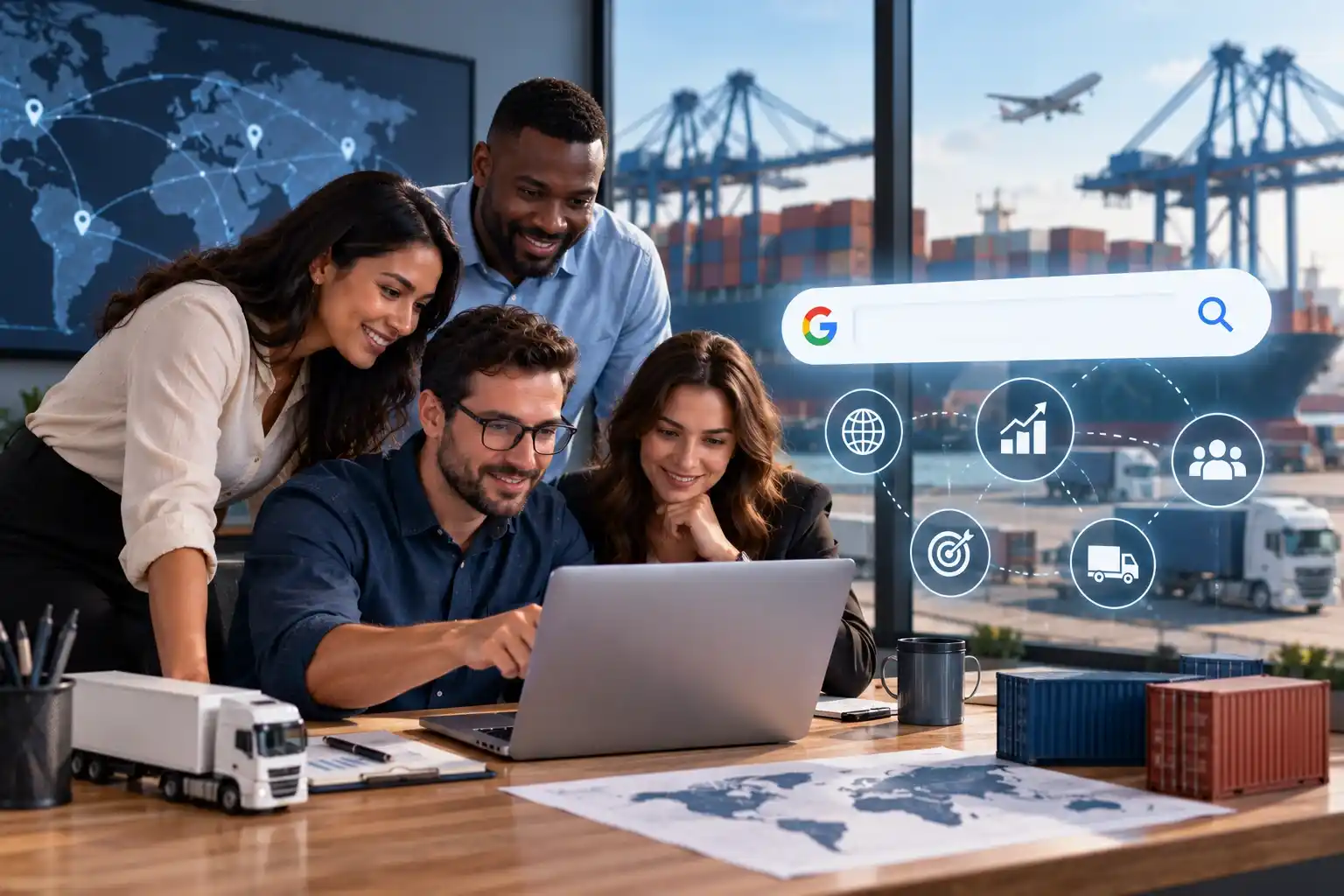
Most B2B buyers researching a freight forwarder, 3PL, or transportation partner start online, comparing service pages, reading case studies, checking reviews, and shortlisting providers long before they ever call a sales rep. A logistics company with weak search visibility or an outdated website is often eliminated from that shortlist without ever knowing it existed.
This shift in buyer behavior means logistics marketing can no longer rely solely on referrals, trade shows, and cold outreach. Search visibility, credible content, and a website that clearly communicates services, coverage areas, and trust signals now play a direct role in whether a prospect ever makes contact.
Digital marketing for logistics companies isn’t about chasing trends, it’s about meeting B2B buyers where they already do their research and giving them the information and confidence they need to reach out.
Why Digital Marketing Matters for Logistics Companies
Logistics is a relationship-driven, high-trust industry, but relationships increasingly start with a search query. Digital marketing helps logistics companies:
- Increase online visibility among prospects actively searching for services
- Generate qualified leads instead of relying only on referrals
- Build brand credibility through content, reviews, and case studies
- Create a competitive advantage in crowded regional and national markets
- Support longer B2B sales cycles with consistent, trackable touchpoints
- Improve marketing ROI by measuring what actually drives inquiries
Because logistics purchasing often involves multiple decision-makers, high-value contracts, and quote-based buying, a consistent digital presence helps a company stay visible throughout an extended evaluation process, not just at the first search.
Understanding the Logistics Customer Journey
A logistics buyer typically moves through recognizable stages:
- Recognizing a shipping, warehousing, or transportation problem
- Researching solutions online
- Comparing providers by service area, capabilities, and reputation
- Visiting websites
- Requesting quotes
- Evaluating vendors before converting
Different channels support different stages, SEO and content build awareness, a strong website and case studies build trust during evaluation, and email or sales follow-up moves qualified prospects toward a decision. Mapping content and channels to this journey, based on a clear ideal customer profile and buyer persona, is more effective than treating every visitor the same way.
Core Digital Marketing Strategies for Logistics Companies
No single channel carries a logistics marketing strategy on its own. The strongest approach combines several working together.
Logistics SEO
Search engine optimization for logistics companies starts with keyword research around specific services (freight forwarding, warehousing, LTL, drayage), industries served, and locations.
- On-page SEO: Optimized titles, service pages, and internal linking, helps search engines and buyers understand what a company offers.
- Technical SEO: Technical SEO (site speed, mobile usability, crawlability) prevents a strong offering from being buried by a broken site.
- Local SEO: Local SEO matters for companies serving specific ports, warehouses, or regions, since many logistics searches include a location.
Content Marketing
Educational content on topics like freight costs, supply chain efficiency, last-mile delivery, or international shipping challenges builds authority and supports SEO. Case studies and industry-specific guides help prospects self-qualify before they ever contact sales, an important advantage in a long B2B sales cycle.
LinkedIn Marketing
LinkedIn remains one of the more relevant social platforms for reaching procurement teams, supply chain professionals, and business owners. Company page optimization, executive thought leadership, and targeted outreach can support both brand visibility and direct lead generation, though results vary by company and audience.
Email Marketing
Permission-based email supports lead nurturing after an initial inquiry, follow-up on quote requests, and ongoing communication with existing customers. Automated sequences can move a prospect from first contact toward a decision without adding manual workload for sales teams.
Google Ads and PPC
Paid search provides immediate visibility for high-intent searches, such as someone actively looking for a freight forwarder in a specific market. Effective logistics PPC marketing depends on tight campaign structure, geographic targeting, dedicated landing pages, negative keywords, and conversion tracking, without these, paid traffic rarely converts into qualified leads.
Social Media
Beyond LinkedIn, platforms can support brand awareness through company updates, employee stories, and behind-the-scenes warehouse or fleet content. Not every platform will be equally valuable for every logistics business, so channel selection should match where the target audience actually spends time.
| Channel | Best For | Main Goal | Typical Strength |
|---|---|---|---|
| SEO | Long-term visibility | Organic leads | Compounding visibility over time |
| Google Ads/PPC | High-intent searches | Immediate lead generation | Fast testing and quick visibility |
| B2B audiences | Prospecting and authority | Reaching decision-makers directly | |
| Content Marketing | Education and trust | Organic discovery | Long-term authority building |
| Email Marketing | Existing leads | Lead nurturing | Relationship building over time |
| Social Media | Brand visibility | Awareness and engagement | Ongoing brand presence |
Digital Marketing by Logistics Business Type
Not every logistics business should use the same playbook.
| Business Type | Marketing Focus |
|---|---|
| Freight forwarders | International shipping content, freight forwarding service pages, LinkedIn outreach to import/export teams |
| 3PL providers | Warehousing and fulfillment content, case studies on scalability, local SEO for warehouse locations |
| Transportation companies | Route/coverage-area pages, capacity and reliability messaging, PPC for time-sensitive searches |
| Shipping companies | International shipping guides, trust signals for cross-border logistics |
| Warehousing operators | Location-based landing pages, storage capability content, supply chain integration messaging |
A freight forwarder generating freight leads, for example, benefits from service pages built around specific trade lanes, educational guides on customs and documentation, and LinkedIn content aimed at import/export decision-makers, a very different mix than a regional 3PL focused on local warehousing marketing and fulfillment capacity.
Types of Restaurants That Need Professional Branding
Traffic alone does not equal marketing success. Logistics companies should track metrics across the full funnel:
| Stage | Key Metrics |
|---|---|
| Awareness | Organic traffic, search visibility, online visibility |
| Leads | Qualified leads, cost per lead, customer inquiries |
| Sales | Lead conversion, sales conversion, sales pipeline |
| Business | Marketing ROI, customer acquisition cost, customer lifetime value |
Google Analytics and CRM integration allow marketing and sales teams to see which channels actually produce sales-ready opportunities, not just website visits, a critical distinction in sales and marketing alignment.
Building a Digital Marketing Strategy: A Practical Framework
- Define business goals and connect marketing objectives to them
- Define the target audience: industries, company size, geography, decision-makers
- Analyze competitors to identify market differentiation opportunities
- Audit the existing digital presence: website, SEO, content, social, analytics
- Select channels based on audience, sales cycle, and budget
- Create content and campaigns aligned to the buyer journey
- Track performance against defined KPIs
- Optimize continuously rather than treating marketing as a one-time project
Common Mistakes to Avoid
- Targeting broad keywords without considering search intent
- Launching PPC campaigns without conversion tracking
- Using the same marketing approach across every service line
- Publishing content without a defined strategy
- Ignoring mobile experience and page speed
- Measuring traffic instead of qualified leads and revenue
How Sir Marketer Can Help
At Sir Marketer, we help logistics businesses turn their online presence into a consistent source of qualified leads and new business opportunities. Instead of relying on a single marketing channel, we create a strategy that connects visibility, credibility, and conversion.
Our approach can help logistics companies:
- Increase search visibility for valuable service, industry, and location-based searches.
- Attract more qualified leads through SEO, Google Ads, and targeted content.
- Improve website conversions with clear service pages, compelling messaging, and strong calls to action.
- Build industry authority through useful content, case studies, and thought leadership.
- Reach B2B decision-makers through LinkedIn marketing and targeted outreach.
- Nurture potential customers with strategic email campaigns and follow-up.
- Track marketing performance using analytics and CRM integration to understand which activities contribute to leads and sales.
Whether you want to generate more freight forwarding inquiries, promote your 3PL services, expand into new markets, or strengthen your overall digital presence, we tailor the strategy to your services, target customers, and business goals.
Ready to turn your logistics marketing into a stronger lead-generation channel? Explore our digital marketing services to see how Sir Marketer can help you grow.
Conclusion
Effective logistics marketing rarely comes down to one channel. SEO builds long-term visibility, content and LinkedIn build trust and authority, PPC and email support conversion and nurturing, and analytics and CRM integration tie it all back to qualified leads and revenue. The goal is a connected, measurable system, not a collection of disconnected marketing activities.
If your logistics company is ready to build a measurable digital marketing strategy, speak with our team to discuss your goals, target market, and growth opportunities.
FAQ’S
What are restaurant branding services?
Digital marketing can increase online visibility, generate qualified leads, build brand credibility, and support longer B2B sales cycles by keeping a company visible throughout the buyer's research process.
How to generate leads for a logistics company?
Combine SEO, a conversion-focused website, targeted content, LinkedIn outreach, and paid search, then nurture inquiries through email and CRM follow-up so leads don't go cold.
How does SEO help logistics companies?
Logistics SEO improves visibility in search results for service- and location-specific queries, helping companies appear when B2B buyers are actively researching providers.
How can logistics companies get more customers?
By combining visibility (SEO, PPC), trust (content, case studies, reviews), and a website that converts visitors into inquiries, then nurturing those inquiries through to sales conversion.
How to grow a 3PL business online?
Focus on local SEO for warehouse locations, content that demonstrates fulfillment and scalability capabilities, and case studies that build trust with prospective clients.
How to generate freight forwarding leads?
Build service pages around specific trade lanes and industries, publish educational content on international shipping and documentation, and use LinkedIn to reach import/export decision-makers.