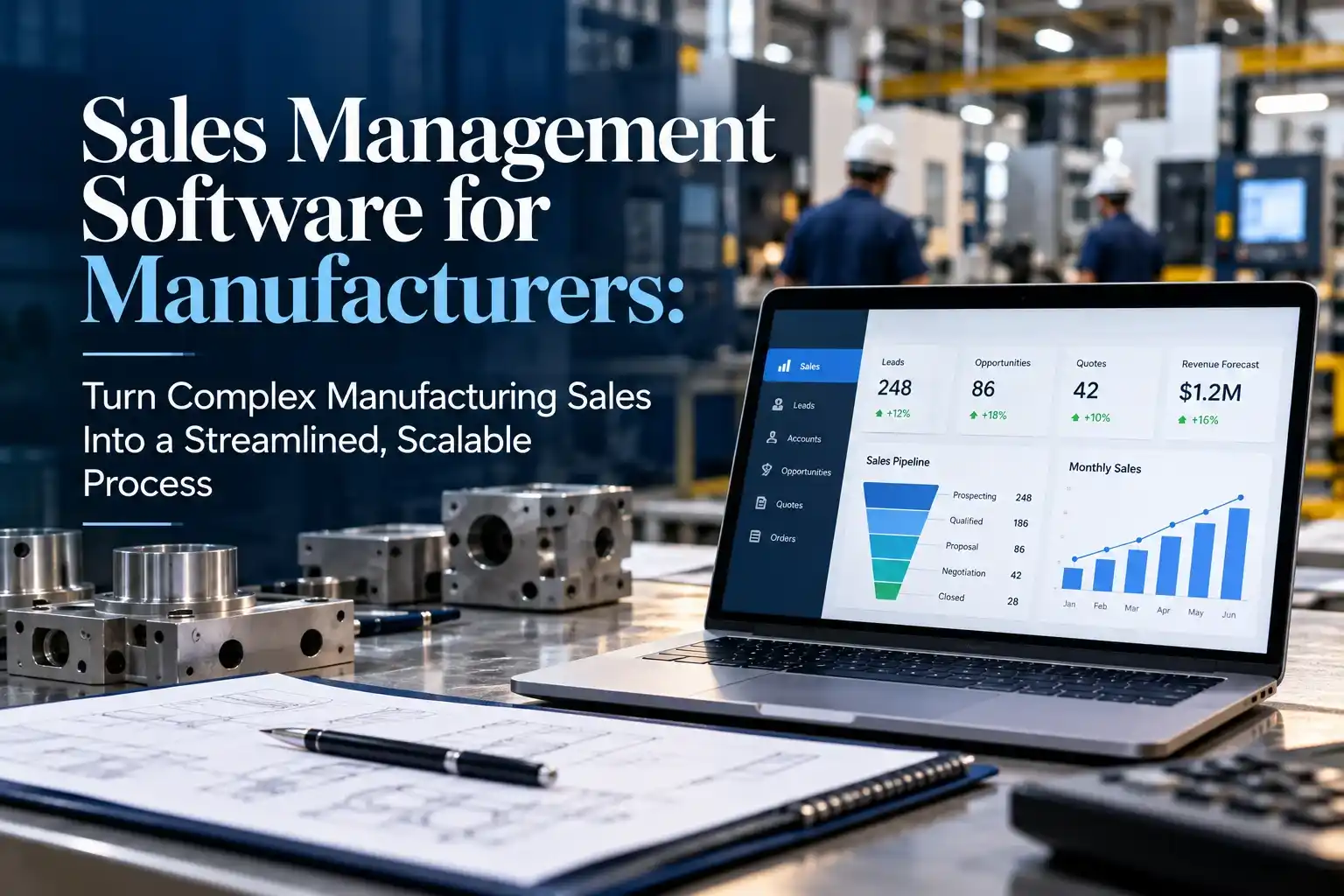
Sales management software for manufacturers helps sales teams track leads, accounts, opportunities, quotes, and pipelines in one place. Manufacturing-focused platforms can also connect to ERP, inventory, and production systems, giving revenue teams a clearer view of customer history, order status, and forecasted revenue. According to Microsoft’s overview of sales management, sales management software can help businesses organize sales activities and manage customer relationships more effectively. Exact capabilities, however, vary by provider.
In this guide, you’ll find all the essential information you need to understand this Sales Management Software for Manufacturers:
Restaurant branding services help restaurant owners build a distinct identity through strategy, visual design, and consistent messaging. From logo and menu design to packaging and digital presence, professional branding shapes how customers perceive a restaurant, builds loyalty, and gives food businesses a lasting competitive edge in a crowded market.
This guide covers everything you need to know about the Restaurant branding services:
Manufacturing sales is more complex than a typical B2B sales process. Long buying cycles, technical requirements, multiple stakeholders, and custom pricing can make deals harder to manage. Salesforce’s manufacturing CRM also highlights the importance of connecting customer, sales, and operational information in manufacturing.
Key challenges include:
Sales management software helps bring this information together, giving teams a clearer view of customers, opportunities, and operational data.
A sales management system for manufacturers typically helps manage:
all in a structured, searchable format.
Compared to a generic sales tool built for retail or services, manufacturing sales management software is designed around longer sales cycles, technical qualification, and the need to integrate with production and inventory data.
Manufacturing CRM software helps businesses organize customer and sales information in one place. Key benefits include:
Feature |
What It Supports |
|---|---|
Lead management software
|
Capturing, qualifying, and routing new inquiries
|
Opportunity management
|
Tracking deals through each pipeline stage
|
Account management software
|
Managing long-term customer relationships
|
Dealer and distributor management
|
Coordinating channel sales relationships
|
Quote management software
|
Managing quote versions and approvals
|
Sales activity tracking
|
Logging calls, visits, and follow-ups
|
Sales pipeline management software gives sales managers visibility into where every deal stands. A manufacturing sales funnel might loosely follow:
lead → qualification → technical evaluation → quote → negotiation → order → fulfillment → repeat business.
Not every manufacturer follows this exact sequence. Pipeline stages should reflect the company’s actual manufacturing selling process, not a generic template.
Pipeline visibility matters most in long buying cycles, where deals can stall for weeks between technical review and final sign-off. With clear revenue pipeline visibility, managers can spot stalled opportunities and prioritize follow-ups rather than relying on memory or scattered notes.
Sales automation can make the manufacturing sales process more organized by handling routine activities such as lead assignment, follow-up reminders, and quote notifications. This allows sales representatives to spend more time communicating with customers and managing complex opportunities.
Quote management is equally important because manufacturing orders often involve customized products, pricing, and specifications. A suitable platform can help teams create, update, review, and track quotes from the initial request through approval and order conversion. Some systems also include CPQ capabilities for products with complex configurations and pricing. Since features differ between platforms, manufacturers should confirm the available quoting and CPQ functionality before choosing a solution.
CRM and ERP integration helps manufacturers connect sales information with operational data. This gives sales teams better visibility into products, inventory, and orders.
Integration Area |
What It Helps With |
|---|---|
Customer & Sales Data
|
Keeps customer and sales information connected.
|
Inventory Visibility
|
Helps sales teams check available stock.
|
Product Availability
|
Shows whether products are available for new orders.
|
Order Status
|
Provides visibility into current and past orders.
|
Delivery Information
|
Helps sales reps provide more accurate delivery expectations.
|
Real-Time Data
|
Reduces reliance on spreadsheets and disconnected systems.
|
Integration capabilities vary by provider, so test the software with your actual ERP, product, and order data before making a decision.
Sales forecasting software for manufacturers typically draws on pipeline value, deal stage, and historical close rates to project revenue. Software can improve access to this data, but it can’t guarantee sales forecasting accuracy. Forecasts are only as reliable as the pipeline data behind them.
Sales analytics software can report on win rate, sales cycle length, rep performance, and customer retention, giving sales managers a dashboard view instead of manually compiled spreadsheets. For field sales management, mobile access can let outside reps check account history and quote status from a job site, depending on the platform’s mobile capabilities.
Capability |
Basic CRM |
Manufacturing CRM |
Advanced Sales Platform |
|---|---|---|---|
Lead & opportunity management
|
✓
|
✓
|
✓
|
Manufacturing-specific workflows
|
Limited
|
✓
|
✓
|
Quote management
|
Varies
|
✓/Varies
|
✓/Varies
|
ERP integration
|
Varies
|
Varies
|
✓/Varies
|
Inventory visibility
|
Limited
|
Varies
|
✓/Varies
|
Field sales support
|
Varies
|
✓
|
✓
|
There is no single best CRM for manufacturing. The right fit depends on company size, product complexity, sales cycle length, dealer/distributor structure, and existing ERP environment.
Choosing the right software starts with evaluating how well it fits your team’s sales process and existing systems.
Make sure the platform supports leads, accounts, opportunities, and customer management.
Check whether it can handle your product configurations, pricing, quotes, and approval workflows.
Confirm that the software can connect with your ERP, inventory, and order systems if required.
Look for useful sales reports, dashboards, pipeline tracking, and forecasting tools.
Check mobile access for field teams along with user permissions and security features.
Consider licensing, implementation, training, integrations, and other costs. Always verify current pricing with the vendor.
Sales software helps manage and organize your sales pipeline, but manufacturers also need a consistent flow of qualified prospects. Sir Marketer helps B2B and manufacturing businesses improve online visibility and generate leads through SEO, PPC, content marketing, and conversion-focused digital strategies.
If you’re looking to connect your digital marketing efforts with your sales goals, explore the digital marketing services offered by Sir Marketer LLC.
Manufacturing sales involves long sales cycles, technical requirements, multiple decision-makers, and coordination with production and inventory. A manufacturing CRM can simplify this process by bringing customer data, sales pipelines, quotes, forecasting, and analytics into one place.
The right software depends on your products, sales process, team structure, ERP system, and budget. Instead of choosing based only on features, manufacturers should select a solution that fits their actual workflow and supports their existing sales process.
Software that helps manufacturing revenue teams manage leads, opportunities, quotes, pipelines, and customer data, often alongside ERP and inventory connections.
There isn't a universal answer, it depends on your selling process, product complexity, and existing systems.
Many can, but integration depth varies by provider and should be tested against your specific ERP.
Even small teams can benefit from centralized customer records, though the right tool scales with team size and complexity.
Pricing varies by user count, modules, integrations, and implementation. Check with the vendor directly for current figures.


Our team will answer all your questions, We ensure a quick response.