Ecommerce email marketing is the use of email to attract, convert, and retain online shoppers. Stores use purchase and browsing data to send welcome, abandoned cart, and post-purchase emails. Automation and personalization make these messages more relevant, which can improve engagement, conversions, and customer retention over time.
This guide covers everything you need to know about Agency vs. In-House Marketing:
Ecommerce email marketing is the practice of using email to guide online shoppers from first visit to repeat customer. Unlike general email marketing, it relies heavily on store data, such as purchase history, browsing behavior, cart activity, to send messages that match where a customer actually is in their buying journey.
For an online store, email connects every stage of the customer journey: a visitor joins the email list, receives relevant emails based on their behavior, and ideally becomes a repeat customer with strong customer lifetime value. Because you own your subscriber list, email marketing gives you a direct line to customers that doesn’t depend on ad platforms or algorithms.
Email marketing remains one of the highest-return channels available to ecommerce brands because it targets people who’ve already shown interest, including subscribers, past buyers, cart abandoners. That makes it well-suited to customer retention, not just customer acquisition.
A well-run email strategy can help:
Results vary by audience, product, and execution, but the underlying mechanic (reaching people who already know your brand) is what makes email marketing so durable as a marketing channel.
Sustainable list growth is opt-in only. Buying or scraping email addresses damages sender reputation and deliverability, and it’s against most email service provider policies.
Ethical ways to grow your email list:
Once you’re collecting emails, list hygiene matters as much as list growth. Regular list cleaning to remove invalid email addresses and inactive subscribers protects your sender reputation and keeps engagement rates healthy.
Customer segmentation splits your list by purchase history, engagement, or product interest so each subscriber gets more relevant emails. Behavioral segmentation goes further, triggering messages based on actions like browsing behavior or cart activity rather than static attributes.
Personalized messaging, such as dynamic content, product recommendations based on browsing or purchase history, tends to outperform generic blasts, but only when it reflects real customer preferences rather than just inserting a first name.
Lifecycle marketing maps email types to where a customer sits in their journey: welcome for new subscribers, retention-focused emails for repeat customers, win-back campaigns for lapsed ones.
Email Type |
Trigger |
Main Goal |
|---|---|---|
Welcome email
|
New subscriber joins list
|
Set expectations, build trust
|
Abandoned cart email
|
Cart created, no purchase
|
Recover the sale
|
Browse abandonment
|
Product viewed, no cart add
|
Re-engage interest
|
Promotional email
|
Sale, seasonal campaign
|
Drive short-term sales
|
Post-purchase email
|
Order placed
|
Confirm order, build experience
|
Re-engagement / win-back
|
Customer inactivity
|
Recover at-risk subscribers
|
Upsell / cross-sell / replenishment
|
Purchase pattern or product type
|
Grow order value, repeat purchases
|
A welcome email series typically covers 2–4 emails introducing your brand and best sellers. Abandoned cart emails usually perform best sent within the first few hours after abandonment, with a reminder and clear CTA, a discount isn’t always necessary and can erode margin if overused. Post-purchase emails (order confirmation, shipping confirmation, review requests) build customer experience even though they aren’t primarily promotional.
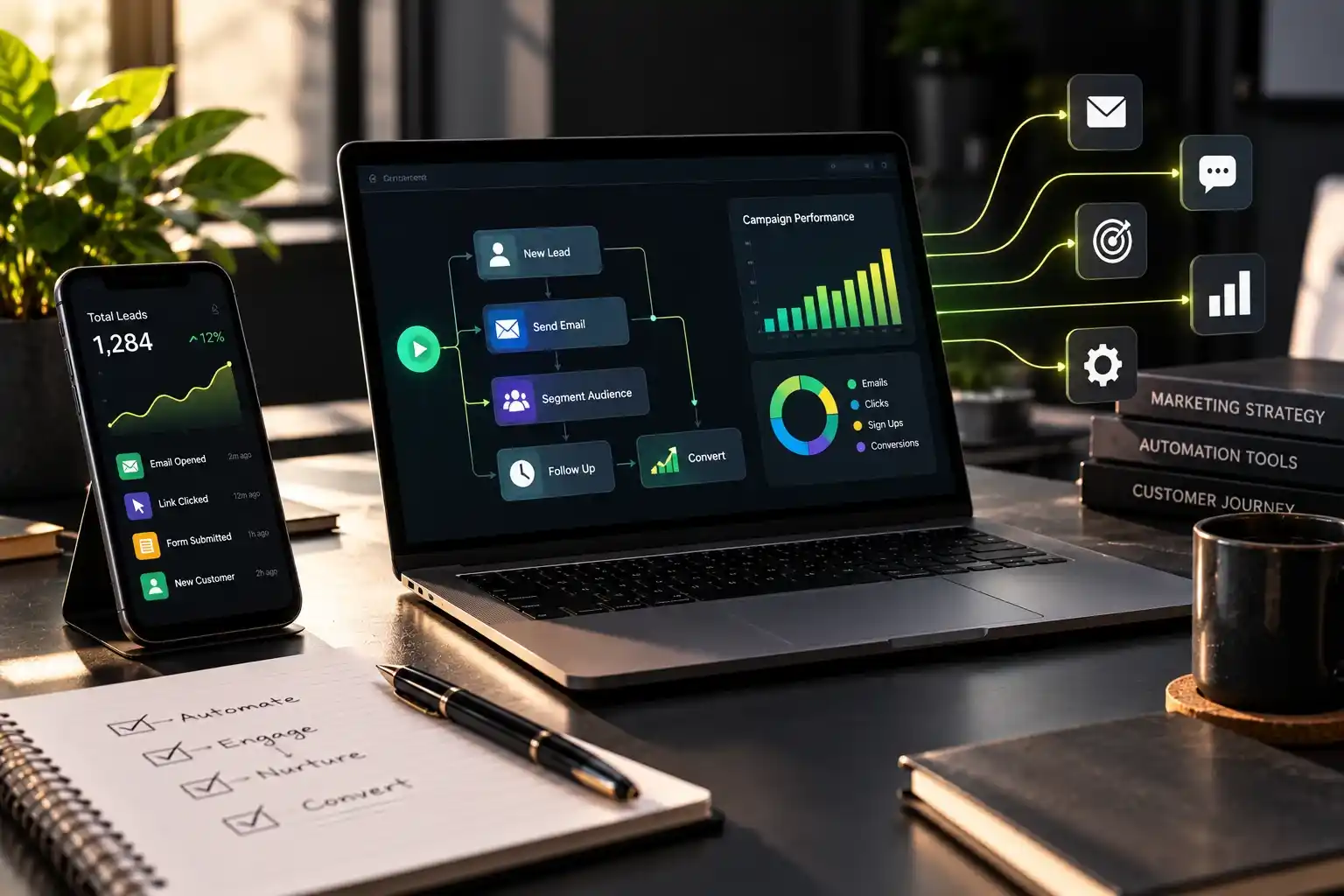
Automation lets a store respond to customer behavior at scale, something manual sending can’t match. Triggered emails fire off events like signup, purchase, cart abandonment, or inactivity, running through an automated workflow without a marketer sending each one individually.
Trigger |
Email Sequence |
Goal |
|---|---|---|
New subscriber
|
Welcome series
|
Engagement, first purchase
|
Cart abandoned
|
Abandoned cart sequence
|
Recovery
|
Purchase completed
|
Post-purchase sequence
|
Experience, reviews
|
Customer inactive
|
Win-back sequence
|
Retention
|
Repeat purchase pattern
|
Replenishment reminder
|
Repeat purchases
|
Email marketing automation for ecommerce doesn’t replace strategy, it scales it. A poorly segmented automated workflow will just send irrelevant emails faster.
Segment your list using purchase history, engagement level, product interest, and customer lifecycle stage, rather than one-size-fits-all sends. Personalization works the same way: pull from real customer data, what they’ve browsed, bought, or ignored, to shape product recommendations and messaging. A subscriber who bought running shoes shouldn’t get the same email as someone who abandoned a cart of kitchenware.
Email deliverability depends on sender reputation and domain reputation, both shaped by engagement and spam complaints. Proper email authentication, including SPF, DKIM, and DMARC records, helps mailbox providers verify your emails are legitimate, which supports inbox placement. Keeping your list clean of invalid email addresses and respecting unsubscribe requests protects deliverability long-term.
Email deliverability depends on sender reputation and domain reputation, both shaped by engagement and spam complaints. Proper email authentication, including SPF, DKIM, and DMARC records, helps mailbox providers verify your emails are legitimate, which supports inbox placement. Keeping your list clean of invalid email addresses and respecting unsubscribe requests protects deliverability long-term.
Platform/Tool |
Best For |
Key Strength |
|---|---|---|
Klaviyo
|
Shopify-heavy ecommerce brands
|
Deep ecommerce data integration
|
Mailchimp
|
Small businesses, general marketing
|
Ease of use
|
Omnisend
|
Multi-channel (email and SMS)
|
Built for ecommerce workflows
|
HubSpot
|
Businesses wanting CRM + email in one
|
Combines marketing automation platform with CRM
|
ActiveCampaign
|
Advanced automation needs
|
Flexible automated customer journeys
|
Most ecommerce email marketing software integrates directly with platforms like Shopify, WooCommerce, BigCommerce, or Magento through native apps or API integrations, syncing purchase history and customer data automatically. Check each platform’s current documentation for specific features before committing, since capabilities change.
Metric |
What It Measures |
Why It Matters |
|---|---|---|
Email open rate
|
Subject line and sender appeal
|
Early engagement signal
|
Click-through rate
|
Content and offer relevance
|
Interest in your message
|
Conversion rate
|
Emails that lead to purchase
|
Direct revenue impact
|
Unsubscribe rate
|
List fatigue or irrelevance
|
Long-term list health
|
Revenue per email
|
Email revenue generated per send
|
Overall campaign value
|
Avoid treating any single metric, especially open rate alone, as the full picture. Conversion rate and revenue per email tell you more about actual business impact.
There’s no universal frequency. It depends on your audience’s expectations, campaign type, and engagement trends. A newer list may tolerate weekly promotional emails; a highly engaged list built on frequent product drops might support more. Watch unsubscribe rate and open rate trends after frequency changes, and adjust rather than following an arbitrary rule.
Effective ecommerce email marketing is not just about sending more emails. It involves building the right strategy, reaching the right customers, and continuously improving how email contributes to the customer journey.
Sir Marketer LLC supports various stages of the email marketing process, including:
Ecommerce email marketing is most effective when it works as a complete customer-retention system rather than a series of promotional messages. By combining thoughtful segmentation, personalized content, automated customer journeys, strong deliverability practices, and ongoing performance analysis, ecommerce brands can turn subscribers into loyal, repeat customers. The key is to send the right message to the right customer at the right stage of the buying journey.
For most ecommerce businesses, the best place to start is with the fundamentals: build a permission-based email list, optimize your welcome series, set up abandoned cart and post-purchase flows, and create targeted campaigns based on customer behavior. From there, use analytics and testing to refine your strategy, improve conversions, increase repeat purchases, and strengthen customer lifetime value.
Ultimately, successful ecommerce email marketing isn’t about sending more emails, it’s about sending more relevant ones. With the right strategy and consistent optimization, email can become one of the most reliable channels for driving sales, building customer relationships, and supporting long-term ecommerce growth.
It's the use of email, informed by purchase and browsing data, to acquire, convert, and retain online store customers through targeted, automated messaging.
Use opt-in signup forms, checkout consent checkboxes, and incentives like discounts or content offers. Never buy or scrape email addresses.
Set up triggered workflows, welcome series, abandoned cart sequences, post-purchase flows, win-back campaigns, using a platform like Klaviyo, Omnisend, or Mailchimp.
Focus on abandoned cart recovery, personalized product recommendations, and consistent post-purchase and win-back sequences rather than one-off promotional blasts.
Send a reminder email within a few hours of abandonment, keep the CTA clear, and test whether an incentive is actually needed before offering one by default.
There's no fixed number, base frequency on audience engagement and campaign type, and monitor unsubscribe and open rates as you adjust.
At minimum: welcome, abandoned cart, post-purchase, promotional, and win-back emails, each mapped to a different stage of the customer lifecycle.
Our team will answer all your questions, We ensure a quick response.