Every business today faces the same challenge: getting found online by the right people, at the right time, with the right message. Digital marketing is the engine that makes that happen — but with so many digital marketing channels available, knowing where to start can feel overwhelming.
This guide cuts through the noise. Whether you’re a business owner, a marketing student, or an entrepreneur building your first brand, you’ll walk away knowing exactly what the 4 types of digital marketing are, how each one works, and how to choose the right mix for your goals.

Digital marketing is the practice of promoting products or services through online channels — including search engines, social media platforms, email, and websites. Unlike traditional advertising, digital marketing lets businesses target specific audiences, measure results in real time, and adjust campaigns on the fly.
According to DataReportal’s Digital 2026 Global Overview Report, in 2026, over 5.4 billion people will use the internet globally. For any business, that’s an audience too large to ignore. Effective digital marketing strategy connects you with potential customers wherever they spend their time online, guiding them from first discovery all the way to purchase and beyond.
There are dozens of internet marketing types in practice today, but four core channels form the foundation of virtually every successful digital marketing strategy:
Digital Marketing Type |
Best For |
Speed of Results |
|---|---|---|
Search Engine Optimization (SEO)
|
Long-term organic growth
|
Slow (3–12 months)
|
Content Marketing
|
Trust, authority, lead generation
|
Medium (2–6 months)
|
Social Media Marketing
|
Brand awareness, community
|
Fast to medium
|
Pay-Per-Click Advertising (PPC)
|
Immediate traffic, conversions
|
Fast (days)
|
Understanding these 4 types of digital marketing — and how they complement each other — is the first step toward building a strategy that actually delivers results.
Search engine optimization (SEO) is the process of improving your website so it ranks higher in organic (unpaid) search results on Google, Bing, and other search engines. When someone types “best running shoes” into Google, SEO is what determines which websites appear on page one.
SEO operates across three pillars:
The key difference between SEO and PPC comes down to cost and timing. SEO is organic marketing — you earn traffic without paying per click, but results take months to build. PPC delivers immediate visibility through paid ads, but traffic stops the moment your budget runs out. Most high-performing businesses use both in tandem.
Google processes over 8.5 billion searches per day. Ranking on page one for your target keywords can drive consistent website traffic growth for years — without ongoing ad spend. For long-term online business growth, SEO remains one of the highest-ROI digital marketing methods available.
Content marketing is the strategic creation and distribution of valuable, relevant content — blog posts, videos, guides, infographics, and podcasts — designed to attract and retain a clearly defined audience. Rather than interrupting people with ads, content marketing earns attention by solving real problems.
A well-executed content strategy moves potential customers through each stage of the customer journey marketing process:
Content marketing and SEO are deeply intertwined. High-quality blog content targets long-tail keywords, attracts backlinks, and builds topical authority — all of which improve your search engine rankings over time.
A SaaS company might publish a weekly blog answering common software questions, driving thousands of monthly organic visitors who eventually convert into free trial signups. A local contractor might use how-to videos on YouTube to build trust with homeowners before they ever pick up the phone.
Social media marketing uses platforms like Facebook, Instagram, LinkedIn, YouTube, and TikTok to connect with audiences, build brand awareness, and drive traffic. It spans both organic content (posts, reels, stories) and paid advertising (Facebook Ads, LinkedIn Ads, and more).
Modern social media platforms offer precision audience targeting that traditional advertising could never match. You can reach people based on their age, location, job title, purchase behavior, and even the pages they follow. This targeting capability makes social media one of the most efficient digital advertising channels for brand awareness campaigns and retargeting.
Key Tools: Meta Business Suite, Hootsuite, Buffer, Sprout Social
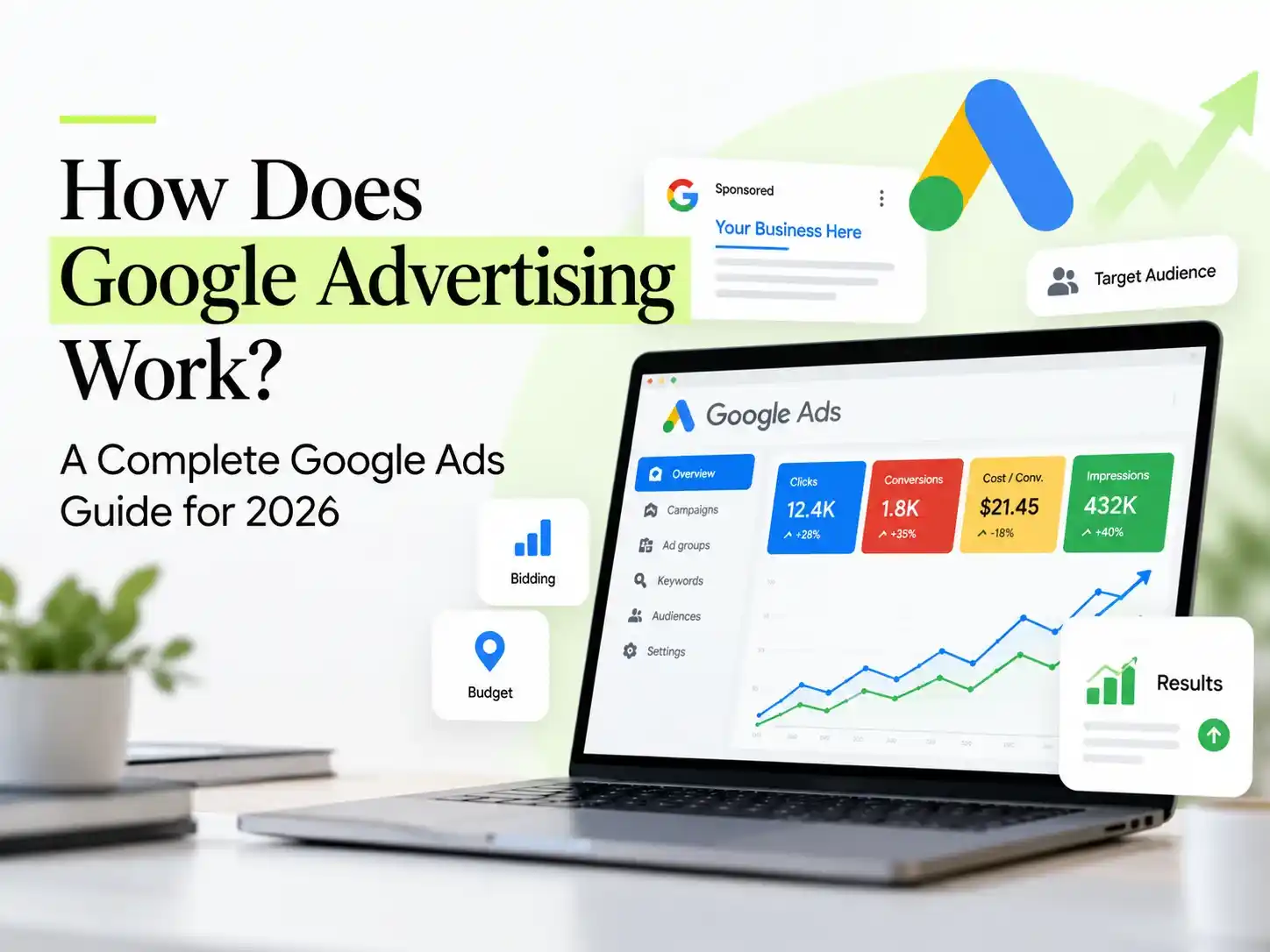
Pay-per-click advertising (PPC) is a paid marketing model where you pay a fee each time someone clicks on your ad. Google Ads is the most widely used PPC platform, placing your ads at the top of search results for targeted keywords. Other PPC channels include Microsoft Ads, Meta Ads, and display networks.
You bid on keywords relevant to your business. When a user enters that keyword, Google immediately initiates a real-time ad auction. Your ad’s position is determined by your bid, your Quality Score (relevance and landing page experience), and your ad copy. The advertiser with the best combination wins prominent placement — often above all organic results.
Unlike SEO, PPC delivers immediate traffic. The real skill lies in conversion optimization — ensuring the users who click your ad take the action you want (purchase, sign up, call). A well-structured Google Ads campaign with a high-converting landing page can generate a positive marketing ROI within days of launch.
PPC is ideal for new businesses that can’t wait months for SEO to kick in, time-sensitive promotions, high-intent commercial keywords, and direct-response campaigns where every dollar of ad spend can be tracked back to revenue.
Key Tools: Google Ads, Microsoft Advertising, WordStream, SpyFu

Beyond the 4 types of digital marketing above, several supporting channels amplify your results:
Every digital marketing campaign — regardless of channel — follows a common framework:
Customer acquisition in digital marketing is rarely linear. A customer might discover you via a Google search, follow you on Instagram, read three blog posts, receive two emails, and then click a retargeting ad before finally converting. The marketing funnel models this journey — from awareness to consideration to decision — and effective digital marketing meets customers at every stage.
Channel |
Real-World Example |
|---|---|
SEO
|
A law firm ranks #1 for "personal injury lawyer [city]" and receives 200+ monthly organic inquiries
|
Content Marketing
|
A HubSpot blog post on "email subject lines" drives 50,000 monthly visitors and generates CRM signups
|
Social Media
|
A skincare brand uses Instagram Reels and influencer partnerships to launch a new product to 500k+ followers
|
PPC
|
An e-commerce store runs Google Shopping ads and achieves a 4:1 return on ad spend during peak season
|
Email Marketing
|
A SaaS company's onboarding email sequence increases 30-day activation rates by 40%
|
There’s no universal answer to which type of digital marketing is best — it depends on your goals, budget, timeline, and industry.
Goal |
Best Channel(s) |
|---|---|
Fast leads, new business
|
PPC (Google Ads)
|
Long-term organic growth
|
SEO + Content Marketing
|
Brand awareness & community
|
Social Media Marketing
|
Customer retention
|
Email Marketing
|
B2B lead nurturing
|
LinkedIn + Content + Email
|
E-commerce sales
|
PPC + Social Ads + SEO
|
The most effective digital marketing strategies don’t rely on a single channel. They combine the best digital marketing channels into an integrated approach where each one reinforces the others.
If you’re new to digital marketing, follow these steps:
Digital marketing for beginners doesn’t require a massive budget. A small business with a smart strategy can outperform a large competitor with a bloated one.
Professionals rely on a curated stack of digital marketing tools to plan, execute, and measure campaigns:
Tool |
Use Case |
|---|---|
Google Analytics
|
Website traffic analysis, user behavior, conversion tracking
|
Semrush
|
Keyword research, competitor analysis, SEO audits
|
Ahrefs
|
Backlink analysis, content research, rank tracking
|
HubSpot
|
CRM, email marketing, marketing automation, blogging
|
Mailchimp
|
Email campaign creation, list management, automation
|
Google Ads
|
Paid search and display advertising
|
Meta Business Suite
|
Facebook and Instagram ad management
|
Small business digital marketing doesn’t require enterprise-level budgets — it requires smart prioritization. Here’s what works for businesses with limited resources:
The goal of small business digital marketing is not to compete on budget — it’s to compete on relevance, speed, and customer understanding.

The digital marketing landscape is evolving rapidly. Key digital marketing trends 2026 include:
At Sir Marketer, we don’t believe in cookie-cutter strategies. We build integrated digital marketing campaigns that combine all 4 types of digital marketing — SEO, content, social media, and PPC — tailored specifically to your business goals, industry, and budget.
Our team of specialists brings deep expertise across every digital marketing channel, from technical SEO and high-converting Google Ads campaigns to data-driven content strategies and social media growth. We’ve helped businesses across industries grow their organic traffic, reduce cost-per-lead, and scale revenue through smart, measurable online marketing strategies.
If you’re ready to stop guessing and start growing, Sir Marketer is your partner.
Understanding the 4 types of digital marketing — SEO, content marketing, social media marketing, and PPC — is the foundation of any effective online marketing strategy. Each channel serves a distinct purpose: SEO and content marketing build long-term organic authority, social media fuels brand awareness and community, and PPC drives immediate, measurable results.
The businesses that win in 2026 are not those that pick one channel and hope for the best. They’re the ones that build an integrated digital marketing strategy where every channel reinforces the others — turning clicks into leads, and leads into loyal customers.
Ready to build a digital marketing strategy that actually moves the needle? Contact Sir Marketer today and let’s create a plan that’s built for your business, your audience, and your goals.
The 4 types of digital marketing are Search Engine Optimization (SEO), Content Marketing, Social Media Marketing, and Pay-Per-Click Advertising (PPC). These four channels form the core of most effective digital marketing strategies.
The best type depends on your goals. PPC delivers fast results; SEO and content marketing build long-term growth; social media excels for brand awareness; email marketing is best for retention. Most successful strategies combine multiple channels.
SEO marketing is the practice of optimizing your website to rank higher in organic search engine results. It involves keyword research, on-page optimization, technical improvements, and link building to drive consistent, unpaid traffic.
Pay-per-click advertising (PPC) is a paid marketing model where advertisers pay a fee each time a user clicks their ad. Google Ads is the most common PPC platform, placing ads at the top of search results for targeted keywords.
Content marketing generates leads by attracting qualified visitors with valuable, educational content — blog posts, guides, videos — and converting them through calls-to-action, gated content, email signups, or free trial offers.
SEO generates organic (free) traffic over time through search rankings; PPC generates paid traffic immediately through ads. SEO has a higher long-term ROI; PPC provides faster, more predictable results.
Professionals commonly use Google Analytics, Semrush, Ahrefs, HubSpot, Mailchimp, Google Ads, and Meta Business Suite for planning, executing, and measuring digital marketing campaigns.
Yes. Small businesses often outperform larger competitors by focusing on local SEO, niche content topics, and personalized email marketing — channels where relevance and quality matter more than budget.
Key trends include AI-powered personalization, the impact of Google's Search Generative Experience on SEO, short-form video dominance, zero-click search optimization, and first-party data strategies following cookie deprecation.
Our team will answer all your questions, We ensure a quick response.