

Understanding SEO for Dentists
The dental industry has never been more competitive. Whether you run a single-chair practice or a multi-location clinic, the patients you need are searching online for a dentist exactly like you. Studies show 71% of patients research a dentist online before booking, and 86% contact a dental practice directly after running a search. If your practice isn’t visible, those patients are calling your competitors.
SEO for dentists is no longer optional. It’s the most cost-effective, long-term strategy available for growing your dental practice online. This guide breaks down everything, from local rankings and Google Business Profile optimization to content marketing, Google Ads, and the latest AI search trends, so you can build a predictable stream of new patient appointments.
- What Is SEO for Dentists?
- Why SEO is Important for Dental Clinics?
- How Local SEO for Dentists Works
- Dentist Website SEO
- High Traffic Keywords for Dentists
- How Social Media Marketing for Dentists can Help?
- Common Dental SEO Mistakes
- Best SEO Strategies for Dentists 2026
- Should You Hire a Dental SEO Agency?
What Is SEO for Dentists?

SEO for dentists (Search Engine Optimization) is the practice of improving your dental website, Google Business Profile, and overall digital presence so that patients find your practice when they search for dental care online.
Unlike paid advertising, SEO generates organic traffic; visitors who find you naturally through Google, without you paying per click. While paid traffic stops the moment your budget runs out, strong SEO compounds over time.
Organic vs. Paid Traffic at a Glance:
Factor |
Organic SEO |
Google Ads (PPC) |
|---|---|---|
Cost
|
Time + strategy investment
|
Pay per click
|
Longevity
|
Builds over months; lasts long-term
|
Stops when the budget ends
|
Trust
|
Higher patient trust
|
Lower perceived trust
|
Best for
|
Long-term growth
|
Fast patient acquisition
|
Ideal use
|
Foundation of digital marketing
|
Supplement SEO
|
Dental SEO services encompass your website, local listings, review profile, content, and technical infrastructure, all working together to make your practice the obvious choice when patients search.
Why SEO Matters for Dental Clinics
Dental patient acquisition has shifted almost entirely online. Consider:
- Local searches now make up approximately 46% of all Google queries.
- "Dentist near me" is searched over 1.2 million times per month in the US alone
- 84% of patients check reviews before booking
- 93% of online experiences begin with a search engine
This means dentist lead generation increasingly depends on how visible your practice is in Google Search and Google Maps. Practices investing in digital marketing for dentists are consistently outpacing those relying solely on word-of-mouth or paid ads.
The long-term economics are compelling too. The average patient lifetime value in general dentistry ranges from $3,000–$15,000. A single new implant case can be worth $25,000 or more. Even a modest improvement in organic visibility can translate directly to significant revenue, making dental practice online strategies one of the highest-ROI investments available.
SMM excels at building brand personality, fostering community, and creating immediate engagement around campaigns, product launches, and trending conversations.
How Local SEO for Dentists Works
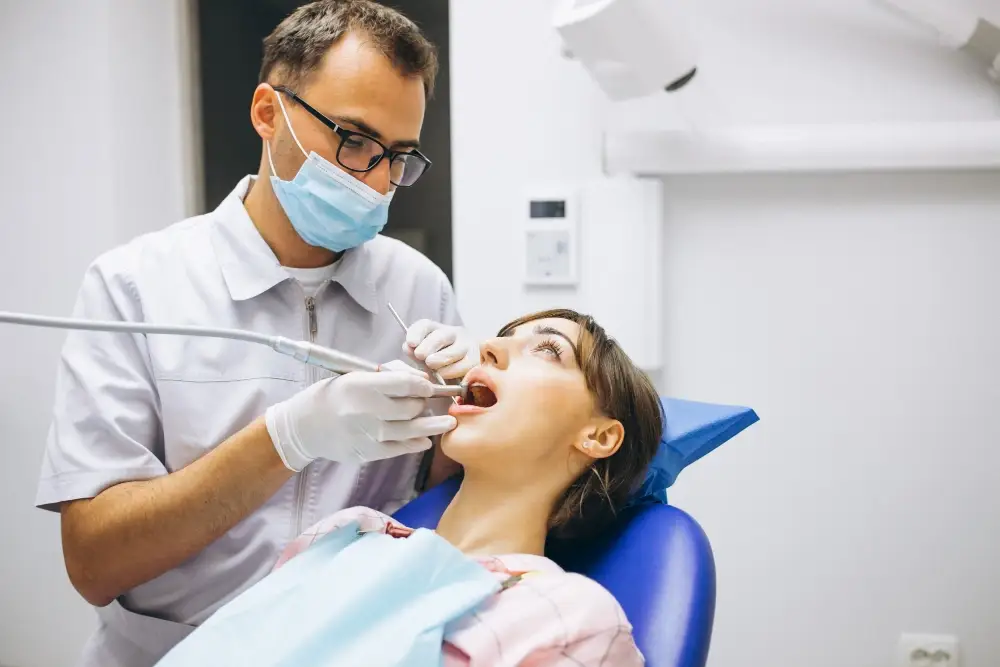
Local SEO for dentists focuses on ranking in the Google “Map Pack,” the top three businesses shown with a map when patients search “dentist near me” or “dentist in [city].”
Google ranks local dental practices on three factors:
- Relevance — How accurately your profile aligns with the patient’s search query
- Proximity — How geographically close your practice is to the person searchinge are you to the searcher?
- Prominence — How trusted and well-known is your practice? (Reviews, citations, engagement)
A critical insight: prominence now outweighs proximity. Practices with stronger review profiles and optimized Google Business Profiles regularly outrank physically closer competitors.
Google Business Profile for Dentists
Google Business Profile for dentists is the single most powerful local SEO asset you have. A fully optimized profile receives 7x more clicks than an incomplete one.
GBP Optimization Checklist:
- Choose “Dentist” as your primary business category instead of narrower alternatives like “Cosmetic Dentist” or “Dental Clinic.
- All secondary categories added (Emergency Dental, Orthodontist, Pediatric Dentist, etc.)
- Write a complete 750-character business description that naturally incorporates relevant keywords and services.
- 30+ high-quality photos uploaded, with new photos added weekly
- Services listed for every procedure you offer
- Weekly Google Posts (educational tips, offers, updates)
- Q&A section populated with common patient questions
- Booking link enabled
Map ranking for dentists also depends heavily on reviews. Practices with 300–500 Google reviews see dramatically higher call volumes than those with fewer than 100. Target a 4.7+ star rating and build a systematic review request process into every patient visit.
Dentist Website SEO Best Practices
Your website is your digital front door. Dentist website SEO requires both technical excellence and patient-focused content.
Core Technical Requirements:
- Mobile-responsive design (67% of dental searches happen on mobile)
- Page load speed under 3 seconds
- HTTPS-enabled site-wide
- Clean URL structure: /services/dental-implants/ not /page?id=123
- XML sitemap submitted to Google Search Console
Dentist website optimization also means fixing the hidden issues that cost rankings: 54% of dental websites fail Google’s Core Web Vitals thresholds, and sites with 4+ second load times see 31% lower local pack inclusion. Compress images to WebP format, audit third-party scripts (booking widgets, chat tools), and test mobile performance regularly.
Technical SEO for dental websites is often the fastest way to unlock ranking improvements. A page that loads in under 2.5 seconds consistently outranks a slower competitor, even with similar content.
Keyword Research for Dental SEO

Dentist keyword research starts by thinking like your patients. They don’t search for “oral prophylaxis,” they search for “teeth cleaning near me.”
Key Keyword Categories:
Keyword Type |
Examples |
Intent |
|---|---|---|
Intent
|
"emergency dentist near me," "24 hour dentist [city]"
|
Transactional (book now)
|
Cosmetic
|
"teeth whitening [city]," "veneers cost [city]"
|
Commercial (comparing)
|
Restorative
|
"dental implants [city]," "All-on-4 near me"
|
Commercial/Transactional
|
Specialty
|
"pediatric dentist near me," "orthodontist [city]"
|
Commercial
|
Informational
|
"What is the cost of dental implants? "
|
Informational (top of funnel)
|
Cosmetic dentist SEO, orthodontist SEO, pediatric dentist SEO, and emergency dentist marketing each require dedicated service pages targeting those specific search terms. Every service you offer should have its own optimized page, not just a paragraph buried on a general “Services” page.
On-Page SEO for Dentists

On-page SEO for dentists covers the elements on each page that signal relevance to Google.
Title tag framework: [Service] in [City] | [Practice Name] Example: Dental Implants Austin | Austin Dental Studio
Meta descriptions don’t directly affect rankings but dramatically influence click-through rates. Include your primary service, city, a unique value proposition, and a clear call to action.
Content marketing for dentists on service pages should follow a clear structure: what the treatment is, what to expect, cost and financing, why choose your practice, patient results, and a booking CTA. Aim for 800–1,500 words per service page, with enough depth to demonstrate expertise without padding.
Internal linking is one of the most underutilized on-page tactics. Link from every blog post to at least one relevant service page. Link related services to each other (implants ↔ bone grafting, veneers ↔ whitening). This distributes authority and helps Google understand your site’s topical depth.
Blog SEO for dentists extends your topical authority beyond service pages.Posts answering real patient questions—such as “How much do dental implants cost in [city]?” or “What should you expect after wisdom tooth removal?,” capture top-of-funnel searches and build trust before patients are ready to book.
Content Marketing Strategies for Dentists
Content marketing for dentists is how you build authority, attract organic traffic, and educate patients throughout their decision journey.
High-performing content types:
- Treatment explainers: "What Happens During a Root Canal: Step-by-Step."
- Cost guides: "Dental Implant Cost in [City]: 2026 Price Guide"
- Comparison posts: "Invisalign vs. Braces: Which Is Right for You?"
- Recovery guides: "Wisdom Tooth Recovery: Day-by-Day Timeline."
- FAQ content: "25 Questions Patients Ask About Dental Implants"
- Video content: Office tours, doctor introductions, procedure walkthroughs
Video is especially important in 2026. YouTube is a primary citation source for Google AI Overviews in healthcare searches. Short, informative videos (60–120 seconds) covering common procedures increase both patient trust and search visibility.
Publish 2–4 blog posts per month consistently. Practices that blog regularly increase dentist website traffic significantly over 6–12 months compared to static sites.
Google Ads and PPC for Dentists
Google Ads for dentists works differently from SEO. It delivers immediate visibility but stops producing results once your budget runs out. Average dental CPCs range from $7–$15, with competitive terms like “dental implants” or “emergency dentist” often exceeding $20 per click.
PPC for dentists is most effective for:
- High-value treatments where one case covers months of ad spend (implants, full-mouth reconstruction)
- Emergency services where patients need a dentist today
- New practices building visibility before organic SEO gains traction
Dental landing pages matter enormously for PPC success. A dedicated landing page for “dental implants” with a clear headline, trust signals, financing info, and a strong booking CTA will convert far better than sending paid traffic to your homepage.
Conversion optimization for dentists means testing headlines, CTA placement, and trust signals. Top-performing dental websites convert 7–10%+ of visitors into appointment requests, significantly above the 2–5% industry average.
The smartest approach: use SEO for long-term patient acquisition and Google Ads to accelerate growth while your organic presence builds. They’re complementary, not competing strategies.
Social media marketing for dentists builds brand awareness and patient trust, especially for cosmetic treatments where visuals drive decisions.
Instagram marketing for dentists works well for before/after smile transformations, team culture content, and educational short videos. Patients researching cosmetic dentistry actively browse Instagram for inspiration. Your content is part of their decision process.
Facebook ads for dentists remain effective for local awareness campaigns, especially targeting specific demographics (families for pediatric care, adults 35–60 for implants and cosmetic work). Retargeting website visitors with Facebook ads creates a powerful awareness loop with your SEO traffic.
Social media doesn’t directly boost Google rankings, but it contributes to brand searches, patient trust, and referral traffic, all of which support your overall dental practice marketing ecosystem.
Dental Reputation Management
Dental reputation management is one of the highest-leverage activities in your marketing strategy. Reviews now account for approximately 24% of local search ranking, their highest level ever.
Online reviews for dentists impact both rankings and conversion. Patients won’t call a practice below 4.0 stars, and the biggest leap in new patient volume happens when you cross 4.7 stars with 100+ reviews.
Systematic review generation process:
- Train your team to request reviews verbally at checkout
- Send an SMS with a direct Google review link within 2 hours of the appointment
- Respond to every review, both positive and negative, within 24–48 hours
- Monitor Healthgrades, Yelp, and Zocdoc weekly
A professional, empathetic response to a negative review often reassures prospective patients more than the negative review harms you.
SEO Analytics and Tracking
You can’t improve what you don’t measure. Dental marketing analytics connects SEO activity to the outcomes that actually matter: new patient appointments.
Essential tracking setup:
- Google Analytics 4 + Google Search Console — traffic, queries, landing page performance
- Call tracking (CallRail or similar) — dynamic number insertion to attribute calls to organic search, GBP, or paid ads
- GBP Insights — track phone calls, direction requests, and profile engagement metrics
Track SEO ROI for dentists by connecting organic sessions → calls → booked appointments → revenue. If your average patient is worth $5,000 over their lifetime and SEO brings in 10 new patients per month, the ROI math is straightforward.
An SEO audit for dentists every 6 months identifies technical regressions, new keyword opportunities, and content gaps before they cost rankings.
Common Dental SEO Mistakes
Even well-resourced practices make avoidable errors that limit their competitive dental industry marketing results:
Mistake |
Impact |
Fix |
|---|---|---|
Wrong GBP primary category
|
Reduced foundational search visibility
|
Reduced foundational search visibility
|
Duplicate location pages
|
Algorithmic demotion for thin content
|
Create genuinely unique content per location
|
Slow website
|
31% lower local pack inclusion
|
Compress images, audit third-party scripts
|
Ignoring reviews
|
Weak prominence signal
|
Build a systematic review request into checkout
|
Thin service pages
|
Won't rank competitively
|
800–1,500+ words per service, EEAT-optimized
|
Keyword stuffing
|
Over-optimization penalty
|
Write naturally for patients first
|
No call tracking
|
Invisible ROI
|
Implement dynamic call tracking
|
Best SEO Strategies for Dentists 2026
The best SEO strategies for dentists in 2026 go beyond traditional optimization. The search landscape now includes Google AI Overviews, conversational AI tools, and zero-click results requiring practices to optimize for being the answer, not just a link.
Key advanced strategies:
AI Search Optimization (GEO): 26% of patients now say AI tools influenced their choice of provider. Organize content using clear question-and-answer sections, add FAQ schema markup, and maintain strong entity signals—such as consistent business information, structured data, and credible citations—to improve how AI systems identify and recommend your practice.
E-E-A-T Content: Every service page and blog post should display the authoring dentist’s credentials, link to peer-reviewed sources where relevant, and be dated and regularly reviewed. Google holds dental content to YMYL (Your Money or Your Life) standards, the highest quality threshold applied to any category.
Local Topical Authority: Build clusters of content around your highest-value services. A pillar page on “dental implants in [city]” supported by cluster pages on cost, candidacy, recovery, and financing signals deep expertise to Google.
Video SEO: YouTube videos with organized chapter sections can improve visibility on both YouTube and Google search results.
Should You Hire a Dental SEO Agency?
Many dentists start with DIY SEO and quickly realize the time, technical expertise, and ongoing effort required are better spent on patients.
In-house vs. Agency:
Factor |
In-House |
Dental SEO Agency |
|---|---|---|
Cost
|
Staff time + tools
|
$1,500–$5,000+/month
|
Expertise
|
General: learning curve
|
Specialized dental SEO experience
|
Speed
|
Slower implementation
|
Faster, systematic execution
|
Accountability
|
Self-managed
|
Dedicated reporting and KPIs
|
Affordable SEO services for dentists exist across a range of tiers. Budget $1,500–$3,000/month for meaningful local market impact; competitive markets or multi-location practices typically invest $3,000–$7,500+.
When you hire an SEO agency for dentists, watch for red flags: guaranteed rankings in 30 days, vague deliverables, no access to your own Google accounts, and backlink volume promises without quality context.
The right dental marketing agency will provide transparent reporting, connect SEO activity to actual new patient appointments, and build a strategy around your practice’s specific competitive landscape.
Conclusion
SEO for dentists is the foundation of modern dental practice growth. While paid ads can accelerate results in the short term, organic search visibility built on a strong Google Business Profile, optimized website, authoritative content, and a healthy review profile creates a compounding asset that generates new patient appointments month after month.
The practices winning in 2026 are those treating digital visibility as a core business strategy, not an afterthought. Patients are searching for you right now. The question is whether they find your practice or your competitors’.
Whether you’re ready to tackle SEO in-house or want to partner with specialists, the time to start building is today. If you’d like an expert team to handle your dental SEO services, local optimization, Google Ads, website improvements, and full-service dental marketing, contact us to discuss a custom strategy for your practice.
FAQ’S
SEO generally begins showing measurable progress within 3–6 months, while stronger competitive rankings often require 6–12 months of consistent effort. It’s a long-term growth strategy rather than an instant solution.
Meaningful results typically appear in 3–6 months. Significant competitive ranking improvements take 6–12 months. SEO is a long-term investment, not a quick fix.
Typically $1,500–$7,500+/month depending on market competitiveness, practice size, and scope of services.
Yes. Dentists consistently rank SEO as their highest-ROI marketing channel. One new implant case can cover months of SEO investment.
They serve different purposes. Google Ads delivers immediate visibility; SEO builds lasting organic presence. Most successful practices use both together.
Start with your core services + city modifiers ("dental implants [city]"), emergency terms, and long-tail informational queries patients use during research.
Extremely. Reviews account for approximately 24% of local ranking influence and are the #1 factor influencing patient choice of dentist.
Optimizing your Google Business Profile, citations, reviews, and location-specific content to rank in Google Maps and local search results.
By optimizing their GBP (category, services, photos, posts), generating consistent 4.7+ star reviews, and building a strong, consistent citation profile across the web.
Absolutely. In most local markets, a well-optimized small practice can outrank a larger competitor with a neglected digital presence.
Yes. Regular blogging increases topical authority, captures informational search traffic, and builds patient trust throughout the decision journey.
Indirectly. Social media builds brand awareness and drives referral traffic, supporting the overall digital ecosystem even if it doesn't directly affect Google rankings.
Links from other websites pointing to yours. Dental backlinks from local chambers, dental associations, healthcare directories, and industry publications improve domain authority and rankings.
Every 6 months at minimum, or immediately following a Google algorithm update or significant traffic drop.
Definitely yes. Organic search remains the highest-ROI patient acquisition channel available to dental practices, and AI-driven search is expanding, not replacing the opportunity.
Categories



You have different questions?
Our team will answer all your questions, We ensure a quick response.
Social Media Marketing for Dentists