The pest control industry is booming — and so is the competition. With thousands of exterminators, termite control specialists, and mosquito control providers fighting for the same customers online, the companies that win are the ones that invest in smart, targeted digital marketing.
If you’re a pest control business owner wondering why your phone isn’t ringing as much as it should, the answer is almost always the same: your competitors are outranking you online. This guide breaks down every proven digital marketing strategy your pest control company needs to generate more leads, book more jobs, and increase revenue in 2026.
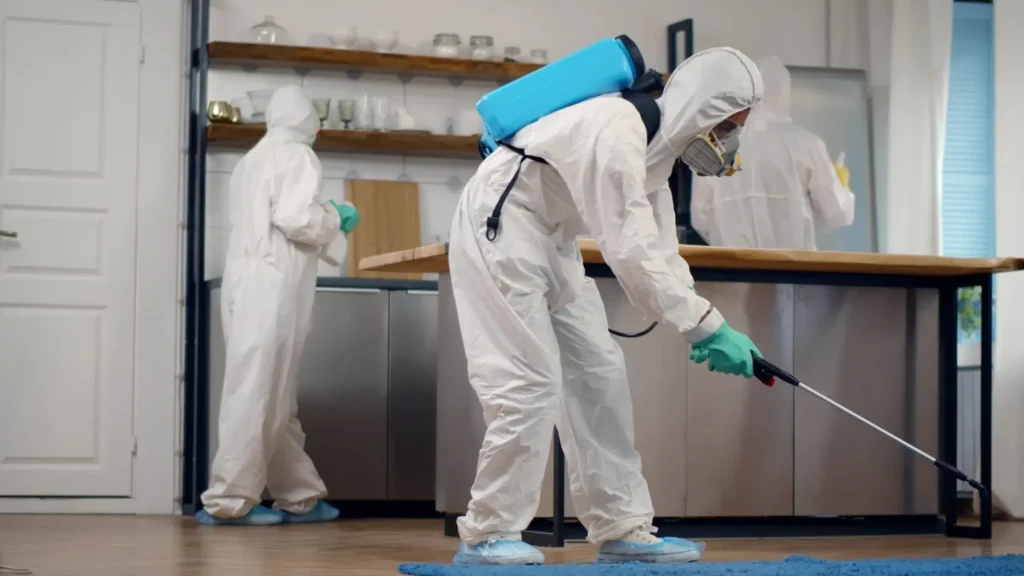
Digital marketing for pest control companies is the strategic use of online channels — search engines, paid ads, social media, email, and content — to attract, convert, and retain customers.
Unlike traditional advertising (yard signs, door hangers, radio), pest control digital marketing is measurable, scalable, and laser-targeted. You reach homeowners and property managers at the exact moment they’re searching for pest control services in their area.
Pest control marketing services encompass everything from SEO and Google Ads to reputation management and email automation — all working together to fill your schedule with qualified jobs.
Here’s the reality: 97% of consumers search online before hiring a local service provider. When someone spots a termite swarm or a rodent in their kitchen, their first move is a Google search.
If your pest control company isn’t visible at the top of those search results, you’re handing jobs to competitors. Key drivers making digital marketing non-negotiable:
Pest control businesses that invest in home service marketing consistently outperform those that rely solely on word of mouth. The data doesn’t lie.
Search engine optimization is the foundation of long-term growth. SEO for pest control companies means optimizing your website so it ranks at the top of Google when someone searches “exterminator near me” or “termite treatment [city].”
Keyword Research Target high-intent phrases like “pest control [city],” “exterminator near me,” “termite inspection,” and “bed bug treatment.” Use tools like Google Keyword Planner or Ahrefs to find what your customers are actually searching.
On-Page SEO Every service page needs an optimized title tag, meta description, H1 heading, and naturally integrated keywords. Each city you serve deserves its own landing page with unique, locally relevant content.
Technical SEO Fast load speeds (under 3 seconds), HTTPS security, clean URL structure, and a crawlable sitemap are non-negotiable. Technical issues silently kill rankings.
Link Building Earn backlinks from local chambers of commerce, home service directories, and industry associations to build domain authority.
If you serve a specific geographic area, local SEO for pest control is your most powerful growth lever. It’s what puts your business on the Google Map Pack — those top three listings that dominate every local search result.
Your Google Business Profile for pest control is your most important free marketing asset. To maximize its impact:
Google Maps ranking for pest control depends heavily on three factors:
Your website is your best salesperson — it needs to work 24/7. Pest control website optimization means turning visitors into booked appointments before they click away.
High converting pest control websites make it impossible for a visitor NOT to call. The average pest control website converts at 2–3%. A properly optimized site can hit 8–12%.
Good pest control website design pairs strong visuals with frictionless user experience. Every page should load fast, look professional, and have one clear call-to-action.
Content marketing for pest control builds organic authority over time. When you consistently publish helpful, expert content, Google rewards you with higher rankings and more organic leads for pest control companies.
High-performing content types:
Blog SEO for pest control compounds over time. A post published today can drive leads three years from now — unlike paid ads, which stop the moment you pause your budget.
For immediate lead flow, Google Ads for pest control deliver unmatched results. When someone searches “emergency exterminator near me” at 9 PM, PPC for pest control companies puts you at the very top of the results — instantly.
Conversion tracking is essential. Know exactly which keywords, ads, and landing pages generate phone calls and form submissions. Without tracking, you’re flying blind.
Metric |
Industry Average |
Optimized Campaign |
|---|---|---|
Landing pages for pest control should be dedicated, distraction-free pages designed for one purpose: getting the visitor to call or book. Never send paid traffic to your homepage.
While most pest control jobs are triggered by immediate need, social media marketing for pest control builds brand awareness and captures demand from homeowners thinking ahead.
Facebook ads for pest control work best for:
Platforms like Facebook and Instagram let you target homeowners by zip code, home ownership status, and income — ideal for residential pest control leads and commercial pest control marketing campaigns.
Online reviews for pest control companies are the new word of mouth. Before a homeowner calls, they read your reviews. A 4.8-star rating with 200+ Google reviews closes jobs before you even answer the phone.
Reputation management for pest control means:
A single-star improvement in your average rating can increase revenue by 5–9% according to Harvard Business School research.
Email marketing for pest control keeps your customer base engaged and drives repeat business. Automated campaigns can:
Marketing automation for pest control connects your CRM, website forms, and email platform so no lead falls through the cracks. Set it up once; it runs while you’re on a job.
Call tracking for pest control assigns unique phone numbers to each marketing channel — Google Ads, organic search, Facebook — so you know exactly where every call originates.
A CRM for pest control companies like ServiceTitan, Jobber, or HouseCall Pro centralizes customer data, appointment scheduling, and follow-up sequences in one platform. Paired with call tracking, you have complete visibility into your marketing funnel.
Seasonal pest control marketing means getting your campaigns live before demand peaks — not after.
Season |
Pest Focus |
Marketing Priority |
|---|---|---|
Termite control marketing should ramp up in March–April when swarm season begins. Mosquito control marketing peaks from April to June. Rodent control marketing dominates September–November. Plan your budgets accordingly.
A high-performing pest control lead generation system combines multiple channels working simultaneously:
To get more pest control customers consistently:
Customer acquisition for pest control through organic search typically delivers a 5:1 to 10:1 ROI over 12 months — significantly better than most paid channels alone. The goal is to book more pest control jobs by combining organic and paid strategies rather than relying on just one.
To increase pest control revenue, focus on three levers simultaneously:
Exterminator marketing that targets both residential pest control leads and commercial pest control marketing doubles your addressable market. A single commercial account can be worth 10x a residential job.
You can’t improve what you don’t measure. Every pest control business investing in digital marketing needs a clear ROI measurement framework.
Track pest control marketing ROI by connecting your call tracking platform to your CRM and Google Analytics. Assign dollar values to booked jobs, and you’ll know exactly which channels are generating profitable revenue. Regular pest control marketing analytics reviews — monthly at minimum — allow you to double down on what works and cut what doesn’t.
Exterminator marketing that targets both residential pest control leads and commercial pest control marketing doubles your addressable market. A single commercial account can be worth 10x a residential job.
Running Google Ads, managing SEO, publishing content, responding to reviews, and tracking analytics is a full-time job — on top of actually running a pest control business.
A specialized digital marketing agency for pest control companies brings:
Many pest control owners waste thousands of dollars on generic marketing agencies that don’t understand the home services industry. A pest control digital marketing agency that specializes in home service marketing knows the difference between termite control marketing and rodent control marketing — and builds campaigns accordingly.
When you hire a pest control marketing agency, you’re not just buying services. You’re buying speed, expertise, and measurable results. The best marketing strategies for pest control companies aren’t applied in isolation — they’re orchestrated as a comprehensive pest control digital marketing system where every channel feeds the next.
The highest-ROI digital marketing strategies to prioritize this year:
High-converting pest control marketing strategies combine all of the above into a unified system — not isolated tactics.
The pest control companies that will dominate their markets in 2026 aren’t the ones with the most trucks — they’re the ones with the best digital marketing systems. From SEO and Google Ads to reputation management and marketing automation, every digital channel is an opportunity to outpace your competition and grow your pest control business.
Whether you’re just starting out or ready to scale from seven figures to eight, the right digital marketing strategies — executed consistently by experts who specialize in home service businesses — will transform your lead flow, lower your customer acquisition costs, and increase pest control revenue year over year.
Ready to book more pest control jobs and outrank your competitors?
Apply for our pest control marketing services today and get a free digital marketing audit of your current online presence. Our team of digital marketing experts will identify exactly what’s holding your business back and build a custom marketing plan to fix it — fast.
It's the use of online channels — SEO, Google Ads, social media, email, and content — to attract and convert customers searching for pest control services online.
Rank higher on Google through SEO, run Google Ads for immediate visibility, optimize your Google Business Profile, build reviews, and ensure your website converts visitors into callers.
Create dedicated pages for every service and city you serve, optimize your Google Business Profile, build local citations, publish regular blog content, and earn quality backlinks.
Yes — especially for seasonal surges and competitive markets. Google Local Service Ads are particularly effective because you pay per lead, not per click.
Affordable pest control marketing services start around $1,000–$2,500/month for SEO; Google Ads budgets typically range from $1,500–$5,000/month, depending on market size.
Typically, 3–6 months for meaningful ranking improvements, 6–12 months for top-3 rankings on competitive terms. Paid ads deliver results immediately.

Our team will answer all your questions, We ensure a quick response.